Treatments
Hair Transplantation
Personalised Planning for Natural-Looking Results
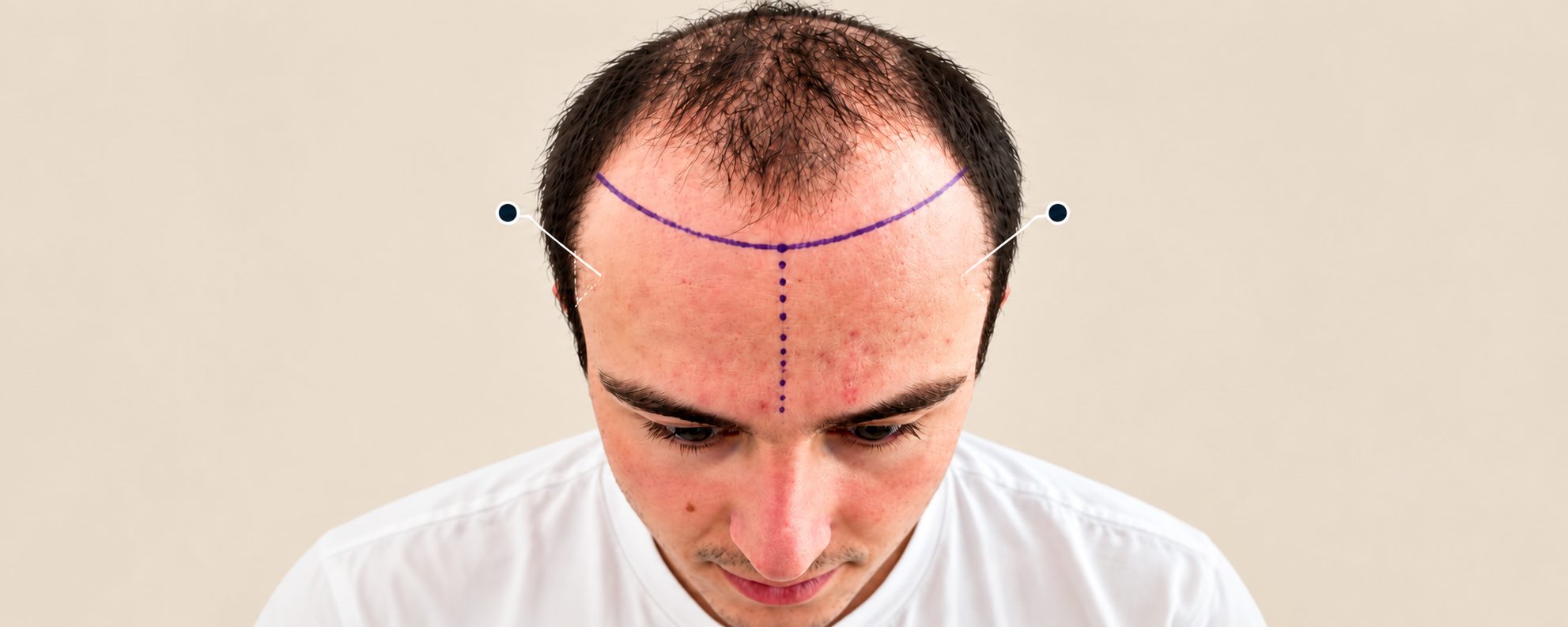
A hair transplant is about far more than moving hair follicles from one part of the scalp to another. A natural, balanced and durable result depends on considering the pattern of hair loss, donor capacity, hairline design, graft distribution, preservation of existing hair and the likelihood of future hair loss as part of one long-term plan.
At Dr Ahmet Demir Clinic, every hair transplant is planned individually. The aim is not simply to transplant the highest possible number of grafts, but to use the available donor reserve responsibly and create a result that suits the patient’s facial proportions and remains natural over time.
First Step: Let Us Assess Your Hair
You can request an initial assessment by sending clear photographs of your hair from the front, back, top and both sides.
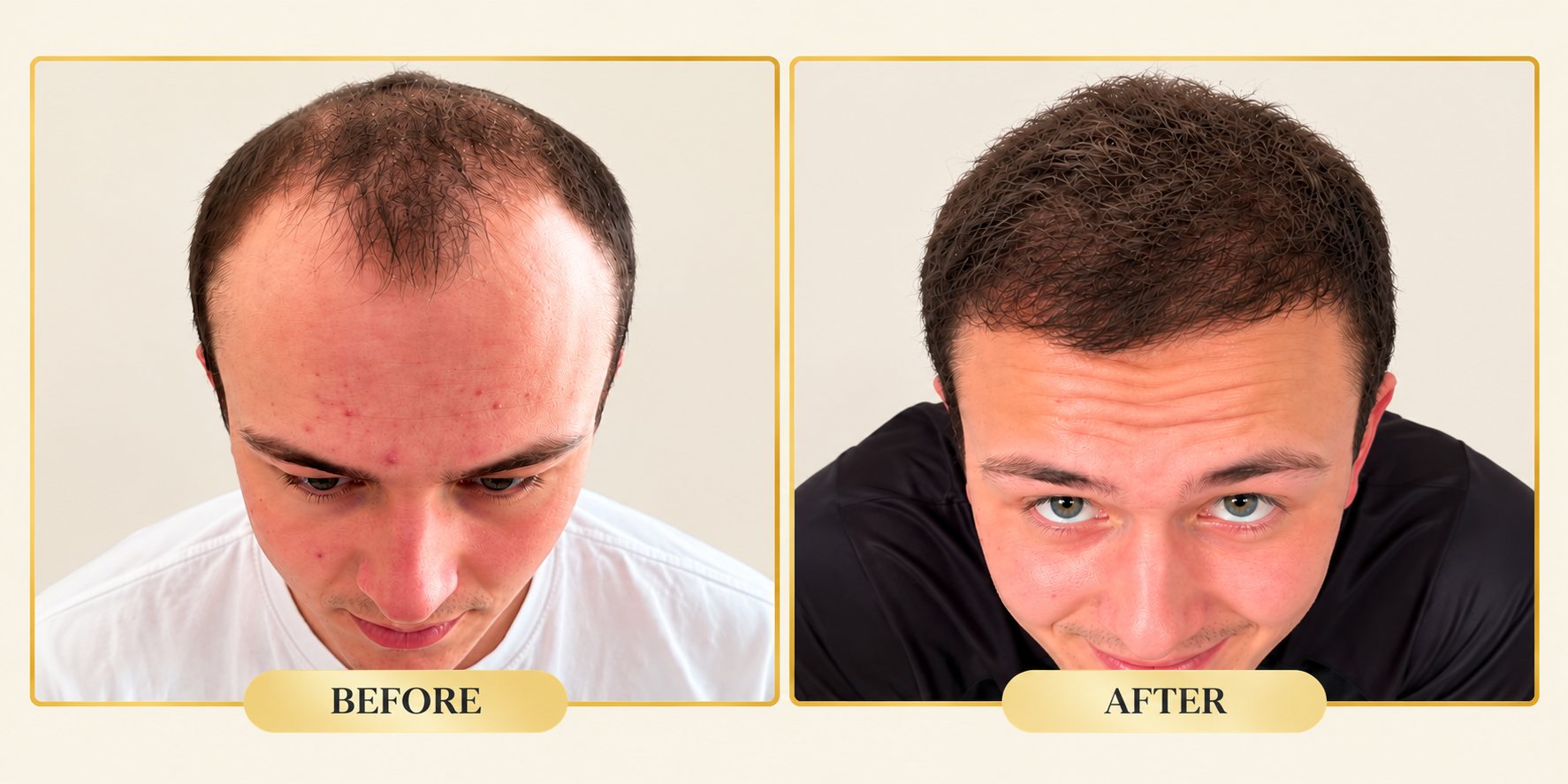
Is a Hair Transplant Right for You?
The decision to have a hair transplant should not be based only on the size of the thinning or bald area. A proper assessment considers:
- The type and degree of hair loss
- Whether hair loss is active or stable
- Hair density in the donor area
- Hair-shaft thickness
- Whether the hair is straight, wavy or curly
- The size and distribution of the thinning area
- The condition of existing hair
- Any previous hair transplant procedures
- Age and family pattern of hair loss
- General health
- Current medication
- Your expectations
Not every form of hair loss requires surgery, and not every type of hair loss is suitable for transplantation. Good planning therefore begins with understanding both the cause and pattern of hair loss and the true capacity of the donor area.
The Most Valuable Resource in Hair Transplantation: The Donor Area
One of the most important factors in a successful hair transplant is proper donor-area assessment. Donor follicles are a finite resource: once a follicular unit has been removed, a new one does not grow back in its place.
The key questions are therefore not simply “How many grafts can be taken?” but also:
- How many grafts can be harvested safely?
- How will the donor area look afterwards?
- Could a second procedure be needed in the future?
- Which areas should receive priority when the grafts are distributed?
More grafts do not automatically mean a better result. What matters is not how many grafts are taken, but how effectively viable grafts are used and how well they grow. The objective is to preserve the donor reserve while creating a balanced, aesthetically appropriate distribution in the areas that matter most.
How Is the Number of Grafts Determined?
One of the most common questions from patients considering a hair transplant is: “How many grafts will I need?” The answer cannot be determined from the size of the bald area alone.
- Size of the area to be treated
- Donor density
- Hair-shaft thickness
- Contrast between hair colour and skin tone
- Whether the hair is straight or curly
- Density of existing hair
- Planned hairline position
- Condition of the crown/vertex
- Expected future progression of hair loss
The Norwood-Hamilton scale can provide a useful starting point, but it is not sufficient on its own. Photographs can help us estimate a range; the definitive plan is made after direct assessment of the hair and donor area.
How Do We Design a Natural Hairline?
The frontal hairline is usually the most visible part of a hair transplant. Giving every patient the same height and shape does not produce a natural result.
Age, facial proportions, forehead height, the existing hairline, donor reserve, degree of hair loss and the likelihood of future loss should all be considered together. Natural hairlines are not perfectly straight. Subtle micro-irregularities, the use of single-hair grafts at the leading edge and placement that follows natural growth angles can make a significant difference.
The goal is not simply to create a lower hairline, but to design one that suits the face and can still look appropriate years later.
Which Hair Transplant Technique Is Better?
There is no single “best” hair transplant technique for every patient. The choice between DHI, Sapphire FUE and other approaches should depend on the treatment area, existing hair, whether a full shave is acceptable, the required graft number, hairline planning and the characteristics of the hair itself.
At our clinic, a technique is selected because it suits the patient—not simply because it is fashionable or widely advertised.
DHI Hair Transplant
DHI stands for Direct Hair Implantation. Grafts are placed using specialised pen-like devices known as implanters or Choi pens. DHI can be particularly useful when implanting between existing hairs, when limited shaving is preferred, in selected hairline work and in areas where controlled placement is important. It is not automatically necessary for every patient, nor does the name of the technique alone guarantee a better result.
Sapphire FUE Hair Transplant
With Sapphire FUE, sapphire blades are used to create recipient channels before the grafts are inserted. Direction, angle, depth and density all matter during channel planning. The use of sapphire blades alone does not determine the quality of the result; donor management, graft quality, hairline planning and implantation technique must be considered together.
DHI or Sapphire FUE?
There is no one-size-fits-all answer. DHI and Sapphire FUE refer to different ways of carrying out the implantation stage, and in selected patients they may also be combined. The choice may differ when we are implanting between existing hairs, treating a large bald area, working with a high graft requirement or trying to avoid a full shave.
The more useful question is therefore not “Which technique is more popular?” but “Which approach is more appropriate for this patient?”
Unshaven Hair Transplant
A full haircut is not always necessary for hair transplantation. In suitable patients, only part of the donor area may be shortened, the shaved section can be concealed beneath longer hair, or a more limited-shave approach can be used.
This may be particularly attractive to women, men with longer hair and patients who would like to return to daily life with a less obvious change in appearance.
Hair Transplant for Women
Female hair loss can behave differently from male-pattern hair loss, so the underlying cause should be assessed first. Hair transplantation may be considered for a receding frontal hairline, temple recession, localised thinning and selected scar or trauma areas.
Avoiding a full shave is especially important for many female patients. Where appropriate, partial-shave or unshaven techniques can be planned.
What Does the Hair Transplant Process Involve?
- Photo assessment — Initial assessment using photographs from the front, top, back and both sides.
- Doctor assessment — The pattern of hair loss, donor area and expectations are reviewed.
- Hair and donor analysis — Hair density, hair calibre and donor capacity are assessed.
- Hairline and graft planning — The hairline is designed and graft distribution is planned.
- Procedure — Grafts are harvested and implanted using the selected technique.
- Aftercare — The first wash, crusting phase and day-to-day care are explained.
- Follow-up — Hair growth is monitored over the following months.
Hair Transplant Recovery Timeline
First few days
Redness, mild swelling, tenderness and crusting may occur.
Days 7–10
Most crusts are removed with the recommended washing and aftercare routine.
Months 1–2
Temporary shedding of some transplanted hairs (“shock loss”) may occur.
Months 2–4
New hair growth may begin.
Months 4–6
The number and thickness of visible hairs gradually increase, and the transplanted hair becomes long enough to comb.
Months 6–9
The visible change becomes more noticeable.
Months 9–12
A substantial part of the result is usually visible. Crown/vertex development can take longer in some patients.
Why Personalised Planning Matters
Two patients may appear to have a similar degree of hair loss yet require very different plans. Donor density, hair calibre, hair colour, scalp shape, the distribution of hair loss and future progression all vary from person to person. For this reason, an individual treatment plan is more meaningful than a standardised package approach.
Why Dr Ahmet Demir Clinic?
Nearly 30 Years of Medical Experience
Dr Ahmet Demir has been practising medicine since 1997.
Doctor-Led Planning
Hairline design, donor management and graft distribution are planned individually according to age, facial features, hair characteristics and long-term needs.
A Donor-Preserving Approach
The goal is not to remove the highest possible number of grafts. It is to use the number actually needed while preserving the appearance and future capacity of the donor area. Excessive harvesting can permanently thin the back and sides and leave too little reserve if another procedure is required later. Our guiding principle is simple: what matters is not how many grafts you take, but how many healthy grafts you can make count.
Technique Selected for the Patient
DHI, Sapphire FUE and unshaven approaches are selected according to the patient’s needs rather than sold as fixed upgrades. No additional fee is charged simply because one technique is chosen over another.
Long-Term Follow-Up
Hair transplantation does not end on the day of surgery. Growth is reviewed and followed over the months that follow.
Our Premium Hair Transplant Approach
For us, “premium” hair transplantation is not simply about hotel, transfer or comfort services. It means allowing sufficient time for assessment, designing a personalised hairline, managing the donor area responsibly, selecting the right technique, distributing grafts carefully and remaining accessible for structured follow-up after the procedure.
For International and Out-of-Town Patients
For patients travelling from abroad or from another city, the process can begin with a photo-based assessment before travel. Depending on the agreed plan, the procedure date, transfer, accommodation, surgery, first review and wash can then be organised.
Final Step: Your Personal Assessment
General information can explain how hair transplantation works, but your treatment plan must be individual. To have your current hair and donor area reviewed, send photographs from the front, back, top and both sides.
Sub-treatments
Frequently asked questions
Is a hair transplant permanent?
Hair follicles taken from the donor area largely retain their relative resistance to androgenetic hair loss after transplantation. Transplanted hair is intended to be long-lasting; however, a transplant does not stop the future loss of the patient’s existing non-transplanted hair.
Is a hair transplant painful?
The procedure is performed under local anaesthesia. There may be brief discomfort during the injections, but the aim is to keep the procedure itself comfortable. Careful anatomical knowledge and proper anaesthetic technique can help minimise discomfort.
How many grafts will I need?
The number depends on the size of the area, donor capacity, hair thickness and planned density. As a broad guide in our planning, Norwood 2–3 may require around 2,000–2,500 grafts, Norwood 4 around 3,500–4,000, and Norwood 5 around 4,500–5,000. Advanced Norwood 6–7 hair loss may require roughly 7,500 grafts overall, but this amount is generally not harvested in a single session because of donor limitations; two or more sessions, usually separated by around a year, may be required.
Is DHI better than Sapphire FUE?
There is no universally superior technique. The choice depends on the hair characteristics, size of the area and operative plan. Sapphire FUE may be more practical when a very high number of grafts is required in one session, whereas DHI is often advantageous for smaller graft numbers, implantation between existing hairs and unshaven procedures.
Does all the hair need to be shaved?
Not necessarily. Partial-shave or unshaven options may be considered in suitable patients. In our practice, a full shave is often not essential in selected patients with Norwood 4 or less, depending on the individual plan.
When will the transplanted hair start to grow?
New growth commonly begins after approximately two to three months. Progress becomes more noticeable over the following months, with most of the final development expected by around 12 months or later.
Is shock loss normal?
Yes. Temporary shedding of some transplanted hairs can occur during the first weeks or months.
Can women have a hair transplant?
Yes, but the cause of female hair loss and the condition of the donor area require particular attention. Treatable causes such as thyroid dysfunction, selected hormonal problems, significant anaemia or nutritional deficiencies should be addressed before transplantation when relevant. In some patients, correcting the underlying problem can improve hair growth and may change whether surgery is necessary.
Message us for a free preliminary assessment
Send your photo via WhatsApp and we'll get back to you with a physician's assessment on suitability and planning.